
Prince Albert of Monaco Blocks Bill to Legalize Abortion and Explains Why

NEED TO KNOW
- Prince Albert of Monaco refused to sign a bill into law that would legalize abortion in the principality
- The proposed legislation was passed with a vote of 19 to 2 by the National Council
- Albert said, “I believe the current system expresses who we are, considering the role of the Catholic religion in our country, while ensuring safe and humane support”
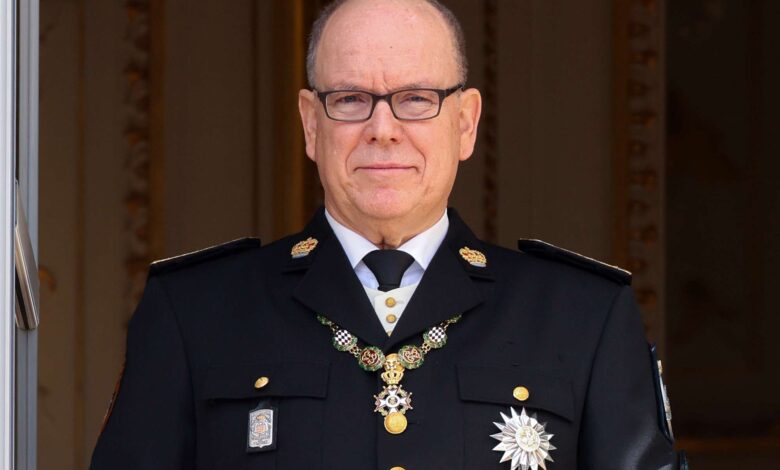
Prince Albert of Monaco has declined to sign a bill that would legalize abortion in the principality, exercising a rare power as sovereign prince.
A proposed legislation sought to authorize voluntary termination of a pregnancy up to 12 weeks (or 16 weeks in cases of rape) and reduce the age of parental consent from 18 to 15, according to The Catholic Herald. Although it was passed with a vote of 19 to 2 by the National Council, Prince Albert, 67, refused to sign the bill into law.
In comments to the local newspaper Monaco-Matin, per The Catholic Herald, Albert remarked on the decision: “I believe the current system expresses who we are, considering the role of the Catholic religion in our country, while ensuring safe and humane support.”
The sovereign prince — who is a father of four from three different mothers — added, “I understand how sensitive this subject is, the emotion it can bring up.”
Maria Laura Antonelli via Vatican Pool/Getty

Minister of State Christophe Mirmand informed National Council President Thomas Brezzo of the decision earlier this month, according to the Monaco Tribune.
Abortion in Monaco is currently illegal except in cases of rape, serious fetal deformity or serious risk to the mother. However, it was decriminalized in 2019, according to France24. “This law provides for an appropriate response to the distress of a pregnant woman, who will no longer face punishment but will be listened to and assisted,” the government said, according to the outlet. “It will also preserve the fundamental value of an unborn child’s right to life and the principles of the state religion.”
While many roles of monarchies around the world are purely ceremonial, Prince Albert’s refusal to sign the bill demonstrates his executive power in the principality.
Stephane Cardinale – Corbis/Corbis via Getty
According to the Monegasque government’s website, “Legislative power is shared between the Head of State, who initiates laws, and the National Council that passes them. Executive power is under the supreme authority of the Prince, and the Principality is governed by a Minister of State who represents Him, who is in turn assisted by a Council of Government. The Minister of State and the Government Ministers are responsible to the Prince for the administration of the Principality.”
Can’t get enough of PEOPLE’s Royals coverage? Sign up for our free Royals newsletter to get the latest updates on Kate Middleton, Meghan Markle and more!
Prince Albert is one of Europe’s Catholic royal leaders, in addition to King Felipe of Spain, King Philippe of Belgium and Grand Duke Guillaume of Luxembourg. He recently attended the funeral of Pope Francis and met with the new Pope Leo.
Alessandra Benedetti/Corbis via Getty
At Pope Leo’s inauguration mass in May, four royal women attended in white ensembles. Princess Charlene of Monaco, Queen Letizia of Spain, Queen Mathilde of Belgium and Grand Duchess Maria Teresa of Luxembourg stood out in the crowd as they honored their special permission to wear white.
This Article was copied from nypost .com, visit to read more
NOTE: THIS SITE DOES NOT BELONG TO FACEBOOK