

NEED TO KNOW
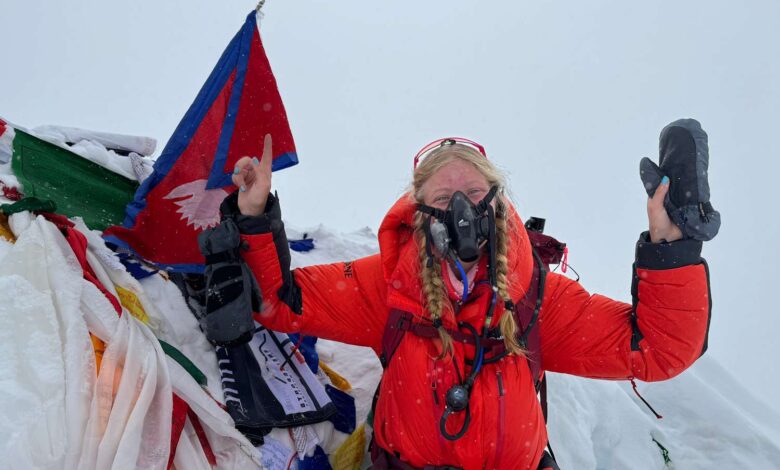
- 17-year-old Bianca Adler, already the youngest woman to summit Mt. Manaslu, attempted Mt. Everest after years of intense physical and mental training
- Speaking with PEOPLE, she explains the practical realities of climbing, including bathroom logistics at base camps and higher altitudes using “wag bags”
- Adler emphasizes responsible climbing, carrying all trash down and leaving the mountain better than she found it
In March, 17-year-old Bianca Adler and her dad set off from Melbourne, Australia, for the ultimate adventure: climbing Mt. Everest.
She wasn’t new to extreme heights. Adler had already conquered peaks between 4,000 and 6,000 meters and made history on Mt. Manaslu, the world’s eighth-highest mountain at 8,163 meters, becoming the youngest woman to summit.
“I trained intensely for all these peaks and kept preparing for Everest afterward,” Bianca tells PEOPLE. “Five to six days a week, I’d do long cardio sessions on the stairmaster and spin bike, plus climbing-specific strength training.”
“My dad and I would tackle six- to eight-day hikes in the remote Australian Alps, covering 25–30 km per day and rationing food and water,” she adds. “That really trained me mentally, pushing through discomfort became second nature.”
Courtesy of Bianca Adler

But climbing the world’s tallest mountain isn’t just about physical endurance — it comes with unexpected challenges, including the not-so-glamorous topic of bathroom breaks.
Adler explains that going to the bathroom on the trail varies depending on where you are on the mountain.
“At base camp and Camp 2, there’s a small tent with a barrel to squat over,” she says. “Higher up, we carry ‘wag bags’ — plastic bags for waste that we bring down with us. It’s a newer rule, but it helps reduce human waste on the mountain.”
Adler, who went viral sharing her climbing journey on TikTok and Instagram, points out that carrying every scrap of trash — including your own waste — at extreme altitude is no easy feat. Exhausted and low on oxygen, climbers often left waste behind, contributing to the mountain’s growing environmental problem.
Roland Hunter, managing director of The Mountain Company, which organizes treks and expeditions in the Himalayas and Karakoram, told Forbes in July that as a result, Nepal is now stepping up enforcement.
He explained to the outlet that climbers are now required to bring down at least eight kilograms (17.6 pounds) of trash or risk losing a $4,000 deposit that funds the Sagarmatha Pollution Control Committee.
He also said that government-appointed officers inspect base camps to ensure they are clean before expeditions can proceed, and even human waste is transported in barrels from Base Camp to Gorakshep.
Courtesy of Bianca Adler
Never miss a story — sign up for PEOPLE’s free daily newsletter to stay up-to-date on the best of what PEOPLE has to offer, from celebrity news to compelling human interest stories.
“This year, drones even helped airlift waste from higher camps, reducing risk for climbers,” Adler says.
“Personally, I try to leave no trace,” she adds. “Everything I bring up — food wrappers, gear, batteries, oxygen bottles — comes back down with me.”
This Article was copied from nypost .com, visit to read more
NOTE: THIS SITE DOES NOT BELONG TO FACEBOOK